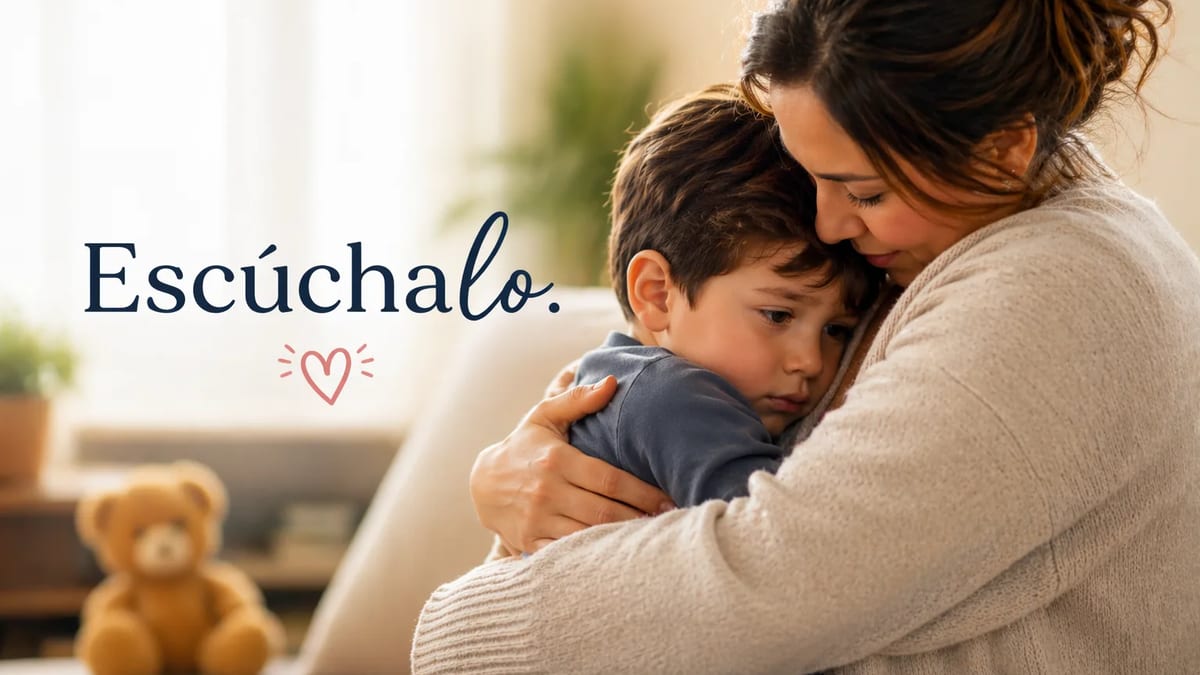
“Mommy, I don’t want to go with him/her.”
At 2 or 3 years old, saying “I don’t want to” is not a tantrum. It is their way of expressing something much deeper: “I don’t feel safe there.”
Abuse does not always leave bruises. Sometimes it hides in phrases like: “Just be quiet, I don’t have the patience to listen to or look at you.” You may not see it on the skin, but it leaves marks on the heart.
Children do not say, “I feel invalidated.” They say “I don’t want to.” And our job is not to force them, but to pause and understand what is behind those words.
What can we do as parents?
1. Believe them first
“Thank you for telling me. I’m listening.”
A child who feels heard learns that their voice matters.
2. Allow them to express their emotions
If it is safe to cry with you, they will also learn to recognize when something is not right outside the home. Home should be their safe place.
3. Ask through play
Sometimes children do not know how to explain what they feel, but they can show it through play.
For example: “Is the doll happy with auntie, or is she sad?”
In those small moments, children often say much more than we imagine.
A child who knows their mother believes them is a child who dares to speak up. And a child who speaks up in time can protect themselves in time.
Do not minimize their “I don’t want to.” Sometimes, it is the clearest and bravest way they know how to ask for help.
Believe. Listen. Protect.
A simple “I believe you” at the right time can heal wounds for a lifetime.
Author: Cindy Torres
#MasterStepsHomeSchool #ChildrenDoNotLie #PresentParents #ParentingWithLove